Cancer
Androgen Effects on T Cell-Mediated Anti-Tumor Immunity
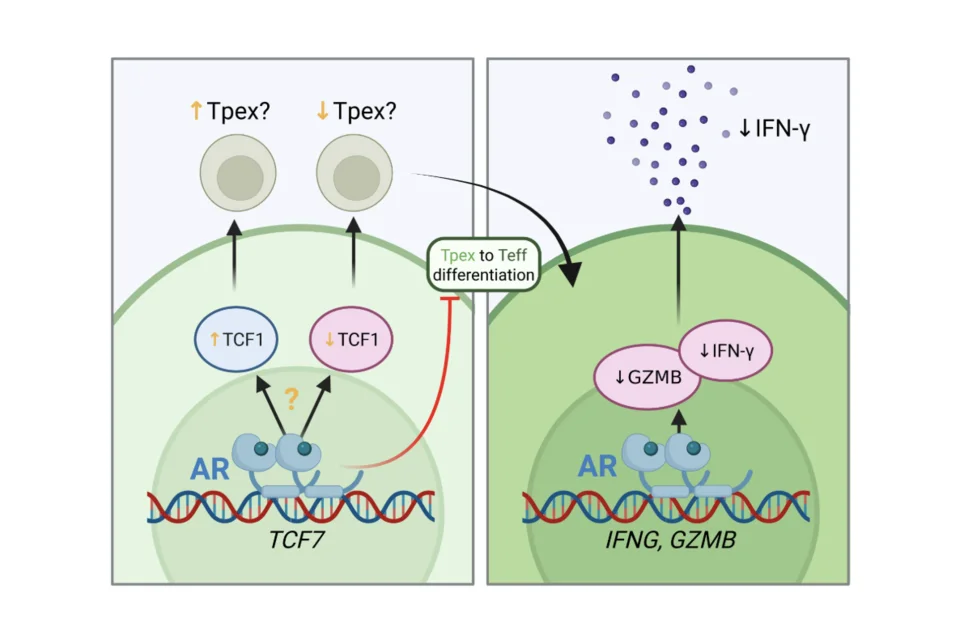
Sex differences in anti-cancer immunity have been attributed to androgen effects on Tpex cells. Androgens bound to androgen receptors (AR) have been reported to either increase or decrease Tcf7 (which encodes TCF1) expression, with subsequent changes in frequency of stem-like progenitor cells (Tpex). Conversion of Tpex to effector T cells (Teff) is also inhibited by androgen/AR complex. Androgen/AR complex can also decrease Gzmb and Ifng transcription in CD8+ T cells. While multiple studies have shown that blockade of androgen signaling leads to favorable T cell effector differentiation and potentiates the efficacy of anti-PD-1 checkpoint blockade, the mechanism(s) by which this occurs remain controversial and will require further study. Read our review: Bustillos et al, Immunological Reviews, 2026.
Sex Chromosomes in Cancer
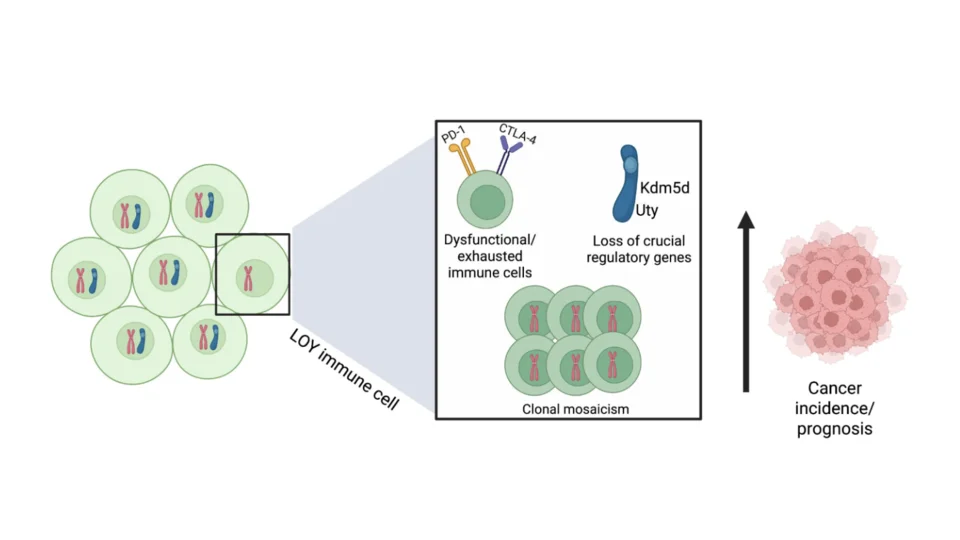
Loss of Y (LOY) in cancer cells has been proposed to be linked to LOY in neighboring T cells, and this concurrent LOY impacts cancer outcomes. LOY in immune cells can lead to dysfunction or exhaustion, as seen in T cell subsets; overall, partial or complete loss of important regulatory genes such as Kdm5d and Uty; and further propagation of LOY. Together, these result in an increase in cancer incidence and poor prognosis for various malignancies. Read our review: Bustillos et al, Immunological Reviews, 2026.